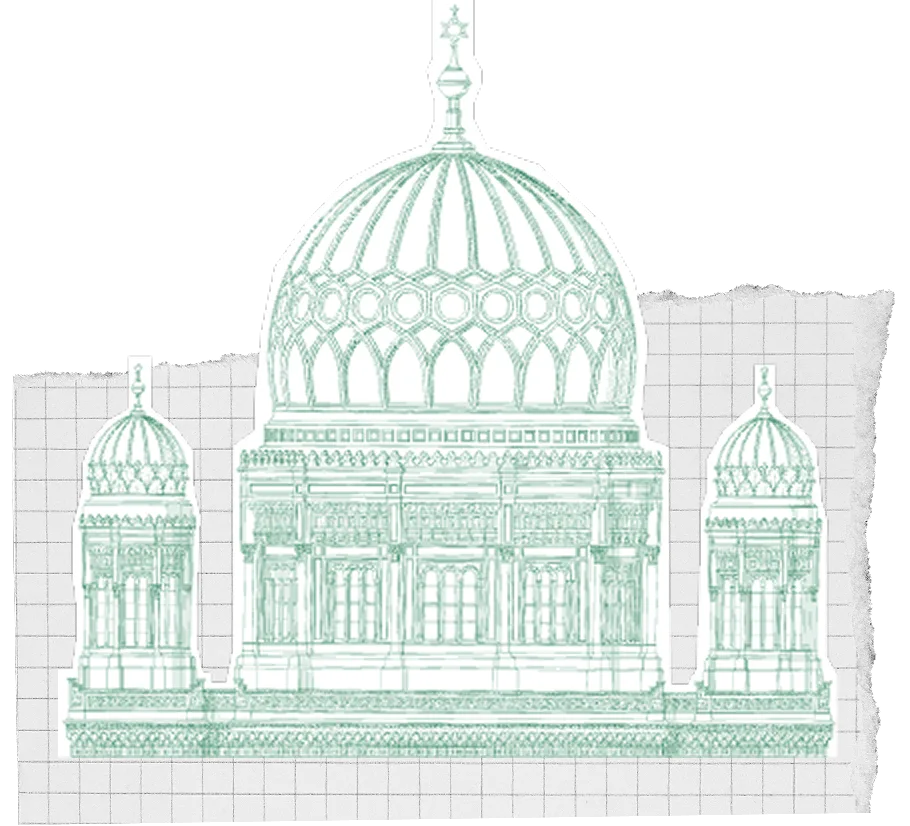
The Spandauer Vorstadt and the Scheunenviertel were a thriving center of Jewish life in central Berlin before the Nazis came to power. Explore the map on your own to discover some of the many Jewish institutions and people who shaped these neighborhoods, or take one of the walking tours inspired by real historical figures who lived and worked here.
Tours
Other Locations
Sports, Culture & Education
Religious Institutions
Welfare and Political Organizations
Hugo Bernhardt and the Scheunenviertelpogrom of 1923
Intro Audio
Information
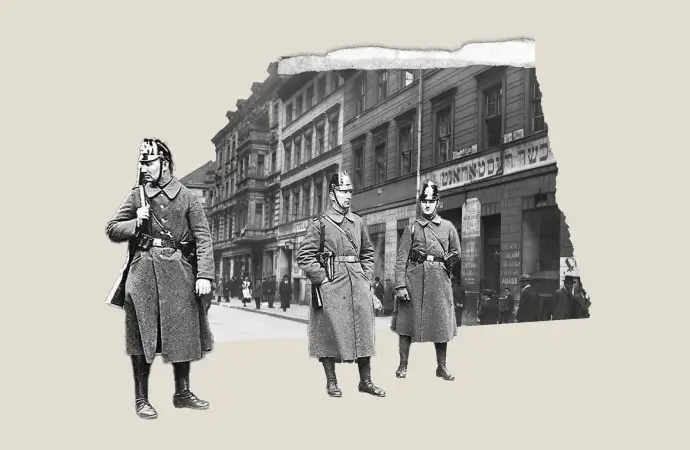
Ten years before the Nazi dictatorship, on November 5, 1923, a pogrom took place in Berlin’s Scheunenviertel neighborhood. Berlin was in the midst of an inflation crisis, and when financial aid payments were cut, Eastern European Jews were made scapegoats for the crisis: many of them were attacked, their businesses, and their homes were plundered. While the police did nothing for hours, Jewish veterans quickly mobilized to try to prevent worse from happening. On this tour, Jewish war veteran Hugo Bernhardt will tell you more about the background to the pogrom and the heroic defense action.
Synagogues, prayers rooms and colleges: Jewish religion in the Spandauer Vorstadt with Regina Jonas
Intro Audio
Information
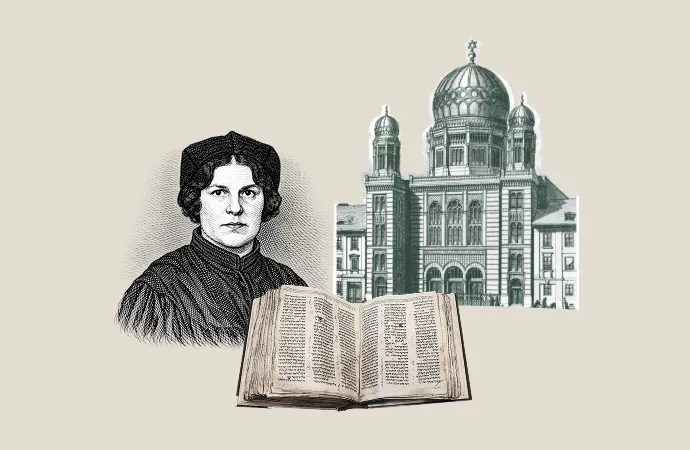
Since the 19th century, Judaism in Germany was undergoing a number of transformations: the struggle for equal rights for Jews raised questions about tradition, assimilation, Jewish scholarship, and the role of women in Judaism, while recent Jewish migrants from Eastern and Central Europe brought their own religious practices with them. On this tour, Regina Jonas, the world’s first ordained female rabbi, shows us the religious diversity of the Spandauer Vorstadt and Scheunenviertel neighborhoods and how these issues were dealt with here.
Everyday life and culture in the Scheunenviertel with Alexander Granach
Intro Audio
Information
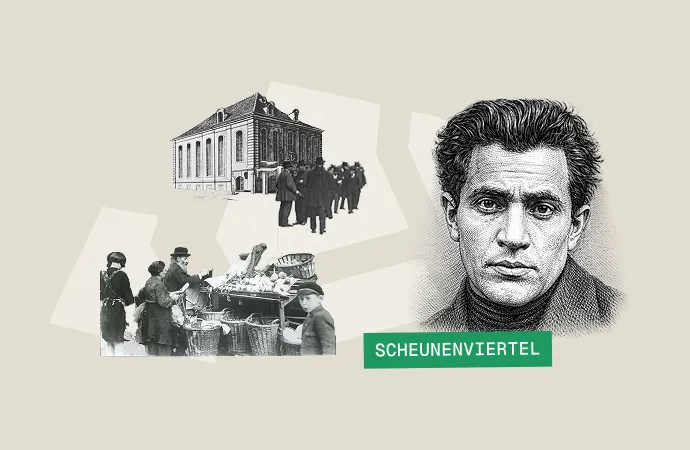
100 years ago, the Scheunenviertel neighborhood was on everyone’s lips with its many stories—a working-class neighborhood with a strong migrant culture, especially Eastern European Jewish culture. Yiddish shop signs written with Hebrew letters were everywhere. But what was everyday life like for the people who lived here? This tour tells the story of life in the district from the perspective of actor Alexander Granach. He talks about shops, theaters, and meeting places where German and Eastern European Jews came together.
Mascha Kaléko's first years in Berlin
Intro Audio
Information
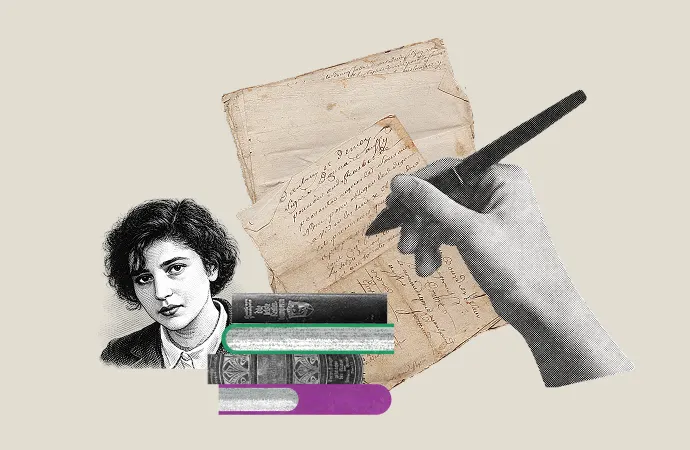
Mascha Kaléko immortalized the light-hearted yet melancholic atmosphere of 1920s Berlin in her poems like no other. What is less well known is that she spent her early years in Berlin in the Scheunenviertel neighborhood. She came here as a child with her family, who, like many other Jews from Eastern and Central Europe, were fleeing the violence of the First World War. She attended the Jewish girls’ school here and later worked in welfare institutions in the surrounding neighborhood. This tour shows places and people that shaped this phase of her life.